
Last summer I planned my nephew’s 7th birthday party and thought I had it all figured out. I got the cake ordered, bought the decorations, invites were sent out on time etc.
But I somehow I managed to forget to have some games the kids would want to play. Twenty minutes in I had a yard full of bored kids asking “what’s next?” while I frantically Googled party games on my phone.
That disaster taught me something important. The games are super important. You could argue they’re pretty much the entire party.
Read More: 50th Birthday Party Games for Men (That Won’t Make Everyone Cringe)
Kids don’t care about themed napkins or a playlist you’ve spent hours on. They care about whether they’re having fun. And if they aren’t then you’ll know it quickly.
But you don’t need to have perfect games. The main thing is having enough variety that when one game doesn’t work (and one will), you’ve got three backups ready to go. It’s knowing which games work for which age groups so you aren’t trying to get 4 year olds to play Capture the Flag or asking 11 year olds to sit still for Duck Duck Goose.
That’s not all though. You need to know how to actually run the games you choose. What if the kids don’t get it? What if it’s too complicated? What if they all just stand there looking at you?
So I’m going to take you through some outdoor birthday party games that work —organized by type so you can mix and match based on the space you have, the weather and the ages you’re dealing with.
I’ll also break down which games work best for different age groups (because what entertains a 4 year old will bore a 10 year old to tears), give you setup tips, talk about prizes that won’t break the bank and maybe most importantly tell you what to avoid so you don’t end up frantically Googling like I did.
Running & Tag Games
These are your bread and butter. Running games work because they don’t really need any equipment and will tire the kids out fast – which is exactly what you want at a birthday party. I’ve seen kids who claimed they were “too old” for tag have the best time once they’ve got started.
Freeze Tag / Blob Tag
Standard Freeze Tag is exactly what it sounds like – one person is “it”, tags someone else and they freeze in place until another player unfreezes them.
It’s simple and you can play it with basically any number of kids. But if you want to make it more interesting then try Blob Tag.
When someone gets tagged they join hands with the tagger, making a growing “blob” of taggers. The blob keeps growing until everyone’s caught.
It’s mad, in the best way possible, and it means even the first kids caught still get to keep playing. Less kids getting bored is always a plus.
Sharks and Minnows
One kid starts as the shark in the middle of the play area. Everyone else lines up on one side as minnows. When the shark yells “swim!” all the minnows try to run to the other side without getting tagged.
Anyone who gets tagged becomes a shark for the next round. This one’s brilliant because as more kids become sharks it gets easier and easier to catch the last minnows, so games don’t drag on forever.
Capture the Flag
 The Original Glow in The Dark Capture The Flag Game
This is the game I remember from my own childhood birthday parties. Two teams, two territories and two flags (or really anything you can use as a flag).
The goal is to get into enemy territory, grab their flag and bring it back to your side without getting caught. If you get tagged in enemy territory you go to “jail” until a teammate rescues you.
It’s perfect for ages 8 and up and it can easily use up 30 to 45 minutes of party time. Just make sure you clearly mark the line and show where “jail” is before you start or you’ll spend the whole game deal with arguments.
Red Light, Green Light
Don’t pass up this one just because it’s simple. One person is the “stoplight” at the far end of the space. Everyone else lines up at the start.
When the stoplight calls “green light!” everyone runs toward them. When they call “red light!” and turn around everyone has to freeze.
Anyone caught moving goes back to the start. First person to tag the stoplight wins and becomes the new stoplight.
For older kids add some variations to the speed with things like “yellow light” meaning you can only walk, or “purple light” meaning you have to hop on one foot. That will keep it interesting even for kids who think they’ve outgrown it.
Duck, Duck, Splash
This is Duck Duck Goose’s cool cousin. Kids sit in a circle, one person walks around tapping heads saying “duck, duck, duck” but instead of saying “goose,” they dump a cup of water on someone’s head and run. That person then chases them around the circle.
It’s great for hot days and younger kids (ages 3 to 7 especially), though honestly I’ve seen teenagers play this and have a great time too. Just make sure parents know to bring swimsuits or clothes the kids can get wet in. And maybe set it up on grass and not near your flowers.
Water Games
If it’s summer and you’re not using water games you’re making things harder for yourself than you need to. Water games are an instant win because kids love getting wet, it keeps them cool and it makes everything more exciting.
Water Balloon Toss / Dodgeball
 Assorted Water Balloon with Filler
Water Balloon Toss is the gentle version – pair kids up, give each pair a water balloon and have them toss it between them while taking a step back after each successful catch. Last pair with an intact balloon wins.
It’s sweet, it builds teamwork and if I’m being completely honestly its gets sort of boring after about five minutes. That’s when you switch to Water Balloon Dodgeball!
Fill up a bunch of balloons (and I mean a bunch as you’re going to go through them faster than you think), split into teams and let the craziness begib.
Getting hit with a water balloon is half the fun. Extra tip: have kids help you fill the balloons before the party starts or get yourself one of those multi balloon fillers that do like 40 at once.
Sponge Bucket Relay
Set up two buckets for each team – one full of water at the start line, one empty at the finish line. Each player soaks a large sponge in the full bucket, races to the empty bucket, squeezes out the water and runs back to tag the next person. First team to fill their bucket to the marked line wins.
This one’s great because you have the speed aspect along with what strategy to use (do you squeeze out every drop or race back faster?) and it’s way less crazy than water balloon fights but still lots of fun.
Sprinkler Obstacle Course
If you’ve got a sprinkler and some random things in your yard then there’s a good chance you can make an obstacle course. Set up some cones to go in and out of, a sprinkler to run through, maybe a kiddie pool to wade across, hula hoops to jump in and out of, even a slip n slide section if you’re feeling ambitious.
Time each kid and let them try to beat their own time. You can make this as simple or elaborate as your setup allows.
Last time I did this I used lawn chairs they had to crawl under, a beach ball they had to bounce while running and two different sprinklers. The kids loved it.
Cup on Head Relay
Fill a plastic cup with water about two thirds full, balance it on your head and race across the lawn without holding it. If you drop it you have to start over.
This game is hilarious to watch and surprisingly tricky. Kids think it’ll be easy and quickly find out it is very much not easy. For older kids add some obstacles they have to get around or have them do it backwards.
Water Gun Freeze Tag
It’s freeze tag but instead of touching people to tag them the tagger has a water gun. If you’re sprayed you freeze until someone unfreezes you.
This is great for hot days and is just about novel enough that it makes regular freeze tag feel fresh again. Make sure you have a few water guns and a way for the tagger to refill or the game will come to a halt every 30 seconds.
Target and Skill Games
Not every kid wants to run full speed for an hour straight. These skill games give you options for different energy levels and temperaments.
Ring Toss / Bean Bag Toss
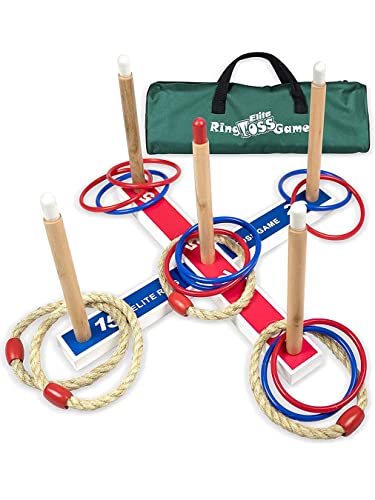
You can buy these games but you can also DIY them in about ten minutes. For ring toss put some empty bottles in the ground (or use wine bottles if you’ve got them), make rings out of rope or pool noodles and let kids toss.
For the bean bag toss cut holes in a cardboard box and give each hole a point value. Or just grab some buckets and have kids toss bean bags into them from bigger and bigger distances. It’s simple, ve try easy to change up and kids can play at their own pace.
Tin Can Knockdown

Stack empty tin cans in a pyramid, give kids soft balls (or bean bags or rolled up socks) and let them try to knock the whole thing down. It’s satisfying in a way that’s hard to explain. There’s just something about watching cans go flying.
Plus you can make more or less difficult by changing how far back kids stand or how you stack the cans. I’ve done this game at parties for 5 year olds and parties for 10 year olds and it works for both if you adjust the distance.
Frisbee Golf

Set up laundry baskets (or hula hoops on the ground, or buckets or whatever you’ve got) as “holes” around your yard or park. Number each of them.
Give each kid a frisbee and have them try to get it into each basket in order, counting their throws. The lowest score wins.
This one’s great because kids can play on their own or in small groups, it uses up space and it keeps them moving without needing them to sprint.
Balloon Darts (With Tape)
Blow up balloons and tape them to a foam board or fence. Give kids soft tipped darts (the kind with velcro or suction cups, not actual sharp darts) and let them try to pop the balloons.
You can write point values on the balloons before you blow them up or hide small prizes inside some balloons. Or just let popping them be its own reward.
Bucket Ball
Line up buckets at different distances from a throwing line. The closer buckets the fewer points, the farther buckets are away then the more points.
Kids try to throw ping pong balls into the buckets. It’s like a simplified carnival game and kids will play it way longer than you’d expect. You can also do this with different sized buckets where the smaller it is the more points.
Related reading
Scavenger and Hunt Games
Scavenger hunts are the perfect way to keep kids engaged for longer periods. They work for almost any age if you change the difficulty and they’re one of the few party games where kids aren’t just burning energy – they’re actually paying attention and problem solving.
Nature Scavenger Hunt
Make a simple checklist: something green, something rough, a smooth rock, a feather, something that starts with B, a leaf bigger than your hand etc. Give each kid or team a bag and the list. First to find everything wins.
This works great at parks or if you’ve got a yard with some variety. I’ve also done themed versions where you find things that are different colors, things a bird might use for a nest, the smallest and biggest of something and so on.
Treasure Hunt / Map Clues
Hide clues around your area, each one leading to the next, with a prize at the end. You can make it as simple or difficult as your audience.
For younger kids use picture clues (a photo of the tree where the next clue is hidden). For older kids use riddles or even a simple treasure map.
I’ve done this where teams compete to find the treasure first and I’ve done it where everyone works together and shares the treasure at the end. Both work, it all depends on whether you want teamwork or a more rivalry energy.
Glow Stick Hunt (Evening Parties)

If your party runs into the evening then you have to do this one. Hide glow sticks around your yard before it gets dark. As the sun sets send the kids out to hunt for them.
They keep the glow sticks they find, which means prizes are built in. The darker it gets the easier it gets to find them, which is a nice way of using the time of day to your advantage.
The kids will love running around in the dusk with glowing treasures. They’ll remember it in way they wouldn’t a regular scavenger hunt.
Color Match Hunt
Split the kids into teams, call out a color and have them race to find five things in that color from outside. First team back with all five wins that round. Then call out a new color.
It’s fast, gets kids moving and you can play as many rounds as you want. Works great if you need to fill 15 minutes and don’t want to set up anything too difficult.
Egg & Spoon Race (or Variation)

Balance an egg (or a ping pong ball, or a small water balloon) on a spoon and race to the finish line. Drop it, you start over. Or if you want to be nice – drop it and you have to stop and balance it again before continuing.
This is one of those games that looks easy but really isn’t. Kids will be laughing at each other and themselves the whole time.
For younger kids use a larger spoon and a ping pong ball. For older kids go for a smaller spoon and an actual egg if you’re feeling brave.
Creative or Chill Options
Every party needs a few lower energy options. Kids get overwhelmed, some kids aren’t into competitive games and everyone needs a break sometimes.
Sidewalk Chalk Art Contest
Give each kid a section of sidewalk or driveway and a bucket of chalk. Set a theme – monsters, under the sea, outer space, a portrait of the birthday kid etc. – and give them 15 to 20 minutes to create something.
Everyone votes on categories like most creative, best use of color, funniest and so on, so everyone wins something. This is perfect for early in the party when not all kids have arrived yet or in the middle of the party when energy is beginning to drop. And parents love taking photos of the finished art.
Bubble Station
 2 Pack Bubble Gun Machine for Kids
Set up a table with various bubble wands, bubble guns and bubble solution. Maybe make some giant bubble wands out of wire hangers and string if you’re feeling ambitious.
Then just let the kids make bubbles! It sounds too simple to work but I promise you, kids will spend 20 minutes at a bubble station without getting bored.
Mix up a big batch of bubble solution (6 cups water, 1 cup dish soap, 1 tablespoon corn syrup) and you’re good to go.
Craft Table with Nature Supplies
Set up a table with rocks, sticks, leaves, flowers, plus glue, paint and markers. Let kids make whatever they want.
Paint rocks to look like animals, decorate sticks, make leaf rubbings, create nature collages etc. Give them bags to take whatever they’ve made home.
This works especially well if you’ve got a mix of ages as the older kids can do something more elaborate and the younger kids just enjoy painting rocks. It’s also a nice option for kids who need a break from the madness of the party but don’t want to feel left out.
Outdoor Story Time (for younger kids)
For parties with kids under 6 you sometimes just need everyone to sit down for ten minutes. Bring out a blanket, get everyone under a tree and read a couple books. Or use puppets. Or tell a story.
It’s a way to reset things that lets kids (and you) catch their breath before getting back into the games. I’ve also done this at the end of parties while waiting for parents to pick up kids as it helps them calm down before they get in the car.
Picnic Blanket Games
Put out blankets and set up simple card games, memory match, Uno, or other easy games kids can play in small groups. This is ideal for the kids who are “gamed out” but don’t want to leave the party.
It’s also great for before the cake when you need everyone to settle down a bit. Having this up your sleeves means not every single kid has to be playing the same game at the same time, which is good for your sanity too.
Game Suggestions by Age Group
Ages 3 to 5
- Duck Duck Splash – Simple rules, involves water, gets everyone giggling
- Bubble Station – Low pressure as you can’t really fail at it
- Sidewalk Chalk – Lets them be creative without competition
- Red Light, Green Light – Easy to understand, practices following directions
- Nature Scavenger Hunt – Keep the list simple (colors, textures) and let parents help
For this age group stay away from anything with rules that are too difficult, have long wait times or too much competition. They’re still learning to manage their emotions around winning and losing and they need games where everyone can feel successful.
Ages 6 to 8
- Freeze Tag – They’ve got the energy and coordination for it now
- Water Balloon Toss – Understands teamwork, loves the splash
- Tin Can Knockdown – Satisfying, can see immediate results
- Sponge Relay – Gets the relay concept, wants to help team win
- Treasure Hunt – Can follow multi step clues, loves the adventure aspect
At this age they understand most game rules quickly, they’re competitive but can usually handle losing and they’ve got energy to burn. You can get through games faster because they catch on quick.
Ages 9 to 12
- Capture the Flag – Complex enough to stay interesting, requires strategy
- Water Gun Freeze Tag – Regular tag feels babyish, but add water guns and it’s cool again
- Glow Stick Hunt – The evening timing makes it feel more grown-up
- Frisbee Golf – Can handle keeping score, likes the sport element
- Balloon Darts – Tests accuracy, has that carnival game appeal
Older kids need games that feel more age appropriate. They don’t want to play ‘baby games’ but they still want to play. Games with some strategy, skill or a twist on familiar ideas work best. They’ll also play for longer without needing to switch something new every ten minutes.
Setup Tips
The games are only half of it. How you set up your space makes the difference between it working out smoothly and being chaos.
Use cones, ropes, and chalk to mark zones. Seriously. Kids need clear visual boundaries. “The yard” is too vague. “Everything between these two cones” is clear.
Mark out team areas for Capture the Flag, draw the circle for Duck Duck Splash, put down a throwing line for target games. It will stop so many arguments before they happen.
Have a “hydration station” with water and snacks. Set up a specific table with water bottles (labeled with kids’ names), some simple snacks and paper towels. Make it in the shade if possible. Kids will behave themselves better if they don’t have to ask permission to grab water.
Keep sunscreen, bug spray and wipes nearby. Have these out and available. You’ll have to reapply sunscreen at least once during an outdoor party.
Bug spray should happen right at the start if there’s any chance of mosquitoes. Wipes are for the inevitable scraped knee, dirty hands or kid who really needs to blow their nose.
Split kids into rotating groups if it’s a big crowd. If you’ve got over 15 kids don’t try to run one game with everyone at once. Set up three or four areas and rotate groups every 10 to 15 minutes. It keeps wait times down and energy up. Plus, if a game isn’t working for one group they’ll move on soon anyway.
Have backup games in case one doesn’t work out or ends early. I cannot stress this enough. The game you’re convinced will last 30 minutes will be over in 8.
The game kids loved at the last party they’ll decide are boring at this one. Have two or three extra games in your back pocket that don’t need a lot setup. I keep a bag with sidewalk chalk, a frisbee, bubbles and a ball just in case I need to come up with something else fast.
Prizes and Rewards
Kids are motivated by prizes, but what I’ve learned is that it matters less what the prize is and more that everyone feels like they got something. If you’ve got one winner walking away with the grand prize while everyone else got nothing you’re going to have a bunch of upset kids.
Stock up on cheap but appealing stuff: stickers, plastic medals, glow sticks, mini toys, temporary tattoos, bubbles, small candy etc. Create categories so everyone wins something — fastest runner, best teamwork, most creative, best splash, most improved, best sport. For relay races or team games make sure every member of the winning team gets the same prize so nobody feels left out.
One system that works really well: give every kid a ticket each time they participate in a game (not just when they win). At the end of the party they can trade tickets for small prizes. More tickets = bigger prize.
It keeps everyone motivated to keep playing and it means the kid who wasn’t great at the games but participated in everything still walks away with something good.
The main rule: no kid should leave your party empty handed. Even if it’s just stickers and candy everyone gets something.
What to Avoid
Long instructions. If you’re talking for more than 60 seconds to explain a game, you’ve lost them. Kids want to play, not listen to you lecture. Keep the rules simple, demonstrate them if you need to and then start the game.
Games with lots of waiting. If kids are standing in a long line taking turns one at a time, you’re also going to have problems. Bored kids get into trouble. Design games where everyone’s active most of the time or set up areas so kids rotate rather than wait.
Running games near concrete. Grass is forgiving. Concrete is not. Kids are going to fall, that’s a given.
So make sure the faster games happen on soft surfaces. I’ve watched too many kids fall over and hurt themselves on driveways during tag games. Save the concrete areas for chalk art and target games.
Anything involving real fire. This should be obvious, but every year I hear a story about someone who set up tiki torches and then had kids running around with water balloons, or someone who did the piñata too close to the grill. Fire and children’s birthday parties don’t mix. If you want lighting for an evening party, use string lights or those solar powered pathway lights.

Sally Gibson is the founder of Someone Sent you a Greeting, a holiday/celebration website. Sally’s writing work has been mentioned in Woman’s World, Yahoo, Women’s Health, MSN and more. If you have any questions get in contact with one of the team via the about page.